







Blog
Vape vs sigaretta: l’odore e ciò che l’odore non può dirti

Cigarette smoke and vape aerosol come from different processes, so their odors need not resemble one another. Cigarettes burn tobacco; e-cigarettes heat liquid to produce aerosol. An odor that seems weaker, sweeter or less familiar does not establish how much chemical exposure is present or whether a room is clear.
For adults sharing a home, car or workplace, the practical question extends beyond which smell is more noticeable. Odor descriptions, product emissions and the decision to permit indoor use are separate questions. This guide does not rank every product’s smell or provide a method for hiding use.
Different sources produce different emissions
La nostra spiegazione di Come funzionano gli svapatori describes liquid heating and aerosol formation. That process differs from a cigarette’s burning source. A difference in generation helps explain why identical odor descriptions should not be expected; it does not by itself quantify the resulting exposure.
Health Canada distinguishes exhaled secondhand vaping aerosol from cigarette smoke, which includes smoke from the cigarette burning between puffs. This is a source distinction, not a guarantee that an individual vape emits nothing between observable events.
The liquid and the device also need identification. A broad label such as vape covers different products and operating conditions. Comparing a familiar cigarette smell with one unfamiliar liquid description cannot establish an emission profile for the whole category.
Make the comparison question specific
When someone says a product smells less, ask what they mean: less noticeable to that person, a different odor character, or a shorter period of noticeable odor in one room. These observations do not all measure the same thing.
| Comparison question | Information needed | Limit of an odor report |
| What does it smell like | Actual product and descriptive context | A name does not identify every chemical |
| How noticeable is it | Observer, distance and setting | One person’s impression is not universal |
| How long is it noticed | Room conditions and observation period | Noticeability is not a clearance test |
| What exposure is present | Appropriate product and air-quality evidence | A smell description cannot provide a dose |
A useful account keeps these conditions visible. A personal observation can be honestly reported without becoming a laboratory result. Statements such as always odorless or gone in seconds require evidence the category name does not supply.
An odor description is not a measurement of chemical exposure.
Your nose is not an exposure instrument
EPA’s indoor persistence explanation warns that absence of visible or noticeable smoke does not establish absence of chemicals. Its discussion also identifies product use and room conditions as relevant to persistence. It does not provide a universal countdown for every room or product.
The reasoning matters for a vape comparison: observing an odor and measuring chemical presence are different tasks. A person noticing little odor has not performed an air sample or identified what other people are breathing.
Conversely, a strong odor description does not by itself give a numeric exposure or establish a particular diagnosis. Avoid replacing one unsupported inference with another. The appropriate response to an indoor-use concern does not require someone to prove a dose through smell first.
Il nostro e-liquid ingredient explanation separates a named flavor from actual ingredient information. A pleasant association with a food or drink is not an analysis of the air produced during use.
Room history matters after the visible cloud changes
A room is not defined only by what is visible at one moment. Its prior use, dimensions, ventilation and surfaces belong in any assessment. The EPA persistence discussion identifies these factors; it does not reduce them to a single waiting time.
EPA explains that chemicals released by smoking or vaping can remain indoors and accumulate on hard or soft surfaces. That supports taking the room’s history seriously without claiming that every product leaves identical amounts or that one fabric will retain an odor for a fixed number of days.
A cleaner smell after airing a room is an observation about smell. It should not be presented as proof that all relevant chemicals have disappeared. The same applies to a fresh scent added by a spray: changing the odor description does not establish that the original exposure has been removed.
Do not use clothing or furnishings as an improvised health test. If there is a building or workplace concern, describe the actual source and location to the responsible person rather than inventing a contamination quantity from an odor impression.
Choose a clear rule for shared indoor air
EPA recommends preventing smoking and vaping indoors and near building entryways or air intakes. It says ventilation, filtration and air cleaning can reduce secondhand exposure but do not eliminate it. That advice includes vehicles, where a window opening is not a guarantee of eliminating exposure.
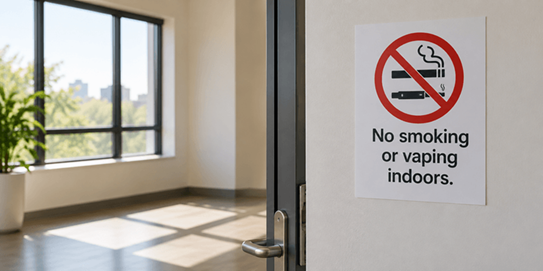
Preventing indoor use addresses the source; the scene is illustrative, not an air-quality test.
This gives occupants a practical decision without a smell-ranking contest: keep shared indoor spaces free from both smoking and vaping. A low-odor claim does not need to become an exception to that rule.
Health Canada’s guidance likewise recommends outdoor-only vaping and caution around others. These are public-health recommendations. Local rules and individual building policies still require their own checks; this article does not declare that a particular venue permits either product.
Product descriptions cannot settle an unexpected odor
An intended aroma description differs from an unexpected burnt smell or a damaged device. The latter calls for the actual device instructions and condition-specific support, rather than repeated activation to see if the smell clears.
Do not attempt to mask an abnormal device odor with a different liquid or an added substance. Our PG and VG compatibility explanation addresses the separate question of intended liquid and equipment compatibility. A carrier ratio does not provide an indoor-air clearance calculation.
If a device is leaking, damaged or unusually hot, stop ordinary use and charging. A statement about how vaping generally smells cannot resolve that item’s condition. Keep the product question and the shared-air decision tied to their own evidence.
Domande frequenti
Is vape aerosol just water steam
No. EPA describes aerosol as tiny particles or droplets in air and explains that smoking and vaping release chemicals. A vapor-like appearance does not identify its contents.
Does no smell mean no exposure
No. An odor impression cannot establish absence of chemicals or measure another person’s exposure.
Does opening a window eliminate exposure
EPA says ventilation can reduce exposure but does not eliminate it. Preventing indoor smoking and vaping addresses the source more directly.
Is an unflavored product automatically odorless or harmless
The description does not establish either conclusion. Flavor wording is not an emissions analysis or a health assessment.
Can odor on clothes tell me how much was absorbed
No. A clothing odor is not a measurement of chemical amount on the fabric or absorbed by a person.
How long should I wait until a room is clear
The sources here establish no universal waiting interval. Product use and room conditions vary; disappearance of odor or a visible cloud is not a clearance test.
Fonti e ulteriori informazioni
Source check date: November 2, 2026. US EPA and Health Canada guidance is identified as public-health information, not a local legal ruling or a test of a specific room.
 Sigarette elettroniche da 9000 boccate
 Sigarette elettroniche da 12.000 boccate
 Sigarette elettroniche da 15.000 boccate
 Sigarette elettroniche da 20.000 boccate
 Sigarette elettroniche da 30.000 boccate
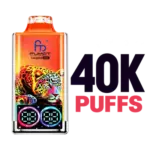 Sigarette elettroniche da 40.000 boccate
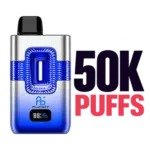 Sigarette elettroniche da 50.000 boccate
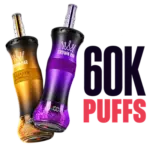 Sigarette elettroniche da 60.000 boccate
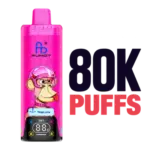 Sigarette elettroniche da 80.000 boccate
 Sigarette elettroniche da 100.000 boccate