







Blog
How to Open a Disposable Vape

Before opening a disposable vape, identify the exact model and check which parts its manufacturer intends you to remove. Some first-use instructions involve taking out a shipping plug or peeling off a protective sticker. Those steps are different from opening the mouthpiece assembly, base cap, or sealed battery housing.
There is no opening method that applies to every disposable. If the instructions prohibit opening the body, leave it sealed. This guide explains how to identify documented access points, follow a verified first-use example, and choose the next step when your real goal is cleaning, troubleshooting, charging, or adding liquid.
Identify Your Exact Model Before Opening Anything
Find the full model name on the casing, packaging, or supplied leaflet. Include words that identify a particular version, such as “Prefilled Pod Kit,” rather than relying only on the brand name. Look for the official instructions that match that product and market.
The FDA’s vape battery guidance recommends understanding the manufacturer’s use and care instructions and contacting the manufacturer if those instructions are missing or unclear.
Before touching a part, establish:
- What you are trying to accomplish, such as first-use setup or replacing a documented pod.
- Whether the instructions identify the part as removable by the user.
- Whether the pictured product and part match the device in your hand.
- Whether there are any signs of damage, leakage, or unusual heat.
A visible seam is not an instruction to separate the casing. Likewise, a charging port describes an electrical connection; it does not identify a filling opening or an accessible battery compartment. Treat each intended operation as a separate question.
Understand What Opening Means for Your Device
An instruction to remove a plug can be easy to misread when a tutorial calls several different components a “cap.” Identify the part by its documented role before trying to move it.
| Part or operation | What to look for in the instructions | Limit of that instruction |
| Shipping plug or protective sticker | A first-use diagram identifying the exact item | Remove that protection, not the surrounding assembly |
| Replaceable pod or other user component | A documented replacement procedure for the model | Follow that procedure without opening the battery housing |
| Sealed mouthpiece, base cap, or body | An explicit manufacturer statement about access | A seam or detachable-looking edge is not permission to pry |
The Vuse One section of Vuse’s official FAQ provides a clear example of restricted access: its battery is inaccessible, and users are told not to open, service, or repair the device. Its charging instructions do not change that restriction.
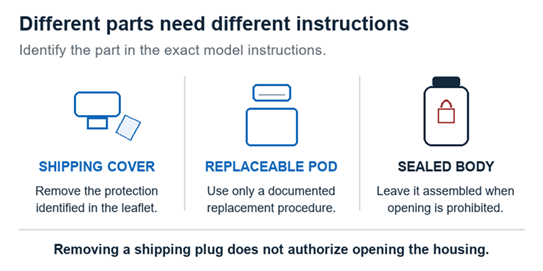
Conceptual symbols distinguish intended operations. They do not show the construction or removal method of a particular model.
Remove Only Parts the Manufacturer Intends You to Remove
Shipping Covers Before First Use
For a documented example, the GEEKBAR HERO manual identifies a silicone plug at the top and a sticker at the bottom for removal during setup. The same manual tells users not to open or tamper with the product.
To apply that distinction:
- Match the model name to the leaflet before following its setup diagram.
- Locate only the protection identified in that diagram.
- Remove the specified plug or sticker using the documented method, leaving the mouthpiece assembly and body in place.
- Check that no packaging material remains over the intended opening and continue with the model’s remaining setup instructions.
This example does not establish that another product has the same shipping protections. If you cannot identify the pictured item, ask for clarification rather than trying to lift the whole mouthpiece or bottom housing.
Documented Replaceable Components
A reusable pod kit can look similar to a disposable while supporting a different operation. The official ELFBAR 600 Prefilled Pod Kit page directly compares that kit with the ELFBAR 600 disposable: the kit has replaceable prefilled pods and a rechargeable device.
Its setup illustrations identify protective plugs and insertion of a compatible pod. These are instructions for the named pod kit, not a way to dismantle the older disposable’s casing. The full product name matters even when both products carry “600.”
For an actual replaceable-pod product, use its documented replacement procedure and compatible component. A photograph alone does not tell you the release mechanism or how the part should move. Keep the battery unit assembled unless its own instructions explicitly describe a user operation.
When the Part Is Not Identified in the Instructions
An online teardown may show that a component can be forced apart. That observation does not establish that removing it is a supported user task or that the device can be returned to its original condition afterward.
If the instructions do not identify the access you need, stop and contact the manufacturer. Do not switch to pliers, blades, heating, or puncturing an unknown section. A tool list from a different device cannot establish where your product’s internal battery, wiring, or liquid reservoir sits.
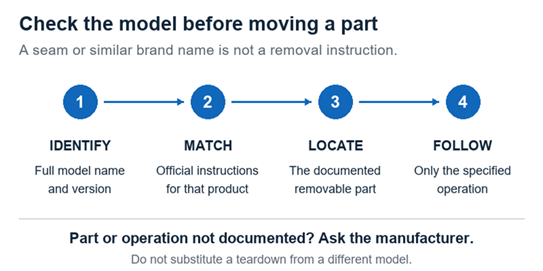
Match the model, instructions, part, and operation before removing anything.
Match the Next Step to the Reason You Wanted to Open It
Preparing a New Device
Start with the first-use instructions. Verify any documented shipping protections and setup controls externally. If a newly unpacked device remains unresponsive after the specified steps, preserve its packaging and purchase details for support.
Do not treat opening the shell as a normal setup step simply because a separate video demonstrates it. A new-device fault and a missed shipping cover require different responses.
Cleaning or Troubleshooting
For surface dirt, the task is usually accessible exterior care. Our guide to cleaning a disposable vape explains the mouthpiece contact surface, casing, and limits of dry-cloth cleaning. Removing a sealed mouthpiece is not necessary for that routine.
If the device will not produce vapor, use the documented external checks described in how to fix a disposable vape that will not hit. Keep that diagnosis separate from physical access. Opening the body does not itself tell you whether the cause is depleted liquid, battery status, or a fault.
Recharging or Adding Liquid
Use the intended external charging method only when the exact model is designed to recharge. Opening a non-rechargeable device and reaching its internal battery is not an alternative charging procedure.
Rechargeable and refillable are separate capabilities. Vuse’s FAQ, for example, gives Vuse One charging directions while explicitly prohibiting refilling. Do not add liquid to a sealed prefilled device because a mouthpiece can be forced off.
A true refillable product needs its own documented filling access, compatible liquid instructions, and closing procedure. Those directions must come from that model’s manufacturer, not from a disposable teardown.
What to Do If the Vape Is Already Open or Damaged
If you have disturbed the sealed body, exposed internal components, or damaged the product, do not use or charge it to test whether it still works. Do not press exposed parts together or reconnect wiring. Contact the manufacturer or seller with an accurate description of what happened.
Vuse’s One-specific instructions prohibit use where there are signs of tampering or where the product is damaged, wet, malfunctioning, or unusually warm. This is another reason that pushing a shell back into place is not evidence that its condition has been restored.
Keep nicotine liquid away from skin, eyes, children, and pets. The FDA’s e-liquid exposure guidance says to wash affected skin thoroughly with soap and water and never swallow e-liquid. Washing exposed skin does not mean rinsing an opened electronic device.
Unusual heat, bulging, and hissing are immediate stop-use warnings in the London Fire Brigade’s vaping guidance. Keep your distance from a device showing signs of active battery failure rather than trying to close, package, or carry it away. If a battery fire occurs, evacuate and call emergency services; the US Fire Administration specifies 911 for US battery-fire emergencies.
Ask for Model Specific Help or Arrange Appropriate Disposal
Make a support request specific enough to answer. Provide the full model name, version if shown, what you wanted to do, which external part you identified, and anything already removed or damaged. An exterior photograph can help if taking it does not require handling a hazardous device.
For example: “I have [full model]. I wanted to [clean the mouthpiece or prepare it for first use]. The leaflet shows [identified part], but I cannot match it to my device. I have not opened the body. Which instructions apply?” If you have opened it, say so accurately.
For an unwanted household vape in the US, the EPA recommends an appropriate household hazardous waste collection route, rather than household trash or ordinary recycling. Confirm acceptance and any damage-related instructions with the receiving program.
Do not open a sealed housing to remove its battery for collection. The EPA’s household e-cigarette collection guidance warns against extracting embedded batteries. That page is written for collectors; its business handling requirements should not be copied as a household packing procedure. Local arrangements elsewhere may differ.
Frequently Asked Questions
Does a Rechargeable Disposable Also Allow Refilling
Not necessarily. Check the filling instructions separately from charging instructions. A model can be rechargeable while its prefilled liquid section remains non-refillable.
Can I Remove a Mouthpiece Because It Looks Detachable
Appearance is insufficient. Find a manufacturer instruction identifying the mouthpiece as user-removable and explaining the operation. A shipping plug and the assembly around it may be different parts.
Why Does a Guide Show the Same Brand Opening Differently
Brands can have different designs and versions. Compare the complete model name and the manufacturer instructions, especially when a disposable and a reusable pod kit share part of their name.
Is It Usable After I Push the Housing Back Together
Reclosing the casing does not establish that internal parts are undamaged. Keep a tampered or damaged device out of use and ask the manufacturer how to proceed.
Does Opening a Disposable Automatically Void Its Warranty
Do not assume one answer applies to every product. Ask the seller or manufacturer to check the written terms for your model, and describe any opening or damage accurately. This guide cannot determine a particular claim’s outcome.
Do Nicotine Free Models Still Have Battery Access Concerns
Yes. A nicotine-free label does not establish that the battery is accessible, replaceable, or intended for user servicing. Follow the device instructions rather than using nicotine content to decide whether to open it.
Sources and Further Information
Sources checked October 19, 2026. Manufacturer examples apply to the named models; they do not establish another product’s construction, legal availability, or repair permissions. US disposal and emergency guidance is identified by jurisdiction.
- FDA vape battery precautions — manufacturer use and care instructions.
- Vuse US FAQ including Vuse One — no internal servicing, no refilling, and tampering or damage restrictions for the named product.
- GEEKBAR HERO user instructions — shipping protections and the separate prohibition on opening the body.
- ELFBAR 600 Prefilled Pod Kit — official comparison with the disposable design and intended pod setup.
- FDA e-liquid exposure guidance — liquid contact and swallowing precautions.
- London Fire Brigade vaping guidance — battery warning signs.
- US Fire Administration community education — evacuation and US emergency response for battery fires.
- EPA disposal guidance for individuals — US household e-cigarette collection route.
- EPA e-cigarette collection tip sheet — collector guidance including embedded-battery removal restrictions.
 9000 Puff Vapes
 12000 Puff Vapes
 15000 Puff Vapes
 20000 Puff Vapes
 30000 Puff Vapes
 40000 Puff Vapes
 50000 Puff Vapes
 60000 Puff Vapes
 80000 Puff Vapes
 100000 Puff Vapes